If you’ve been googling “why is my child so defiant” at ten o’clock at night, you’re not alone, and the answer might not be what you think.
Before we talk about your child, I want to ask you something first. What is going on with you internally right now? Is something happening in your life that your child could be picking up on? Because if you’ve been googling or asking Chat GPT “why is my child so defiant” at ten o’clock at night, exhausted and out of ideas, the answer might start somewhere you haven’t thought to look yet.
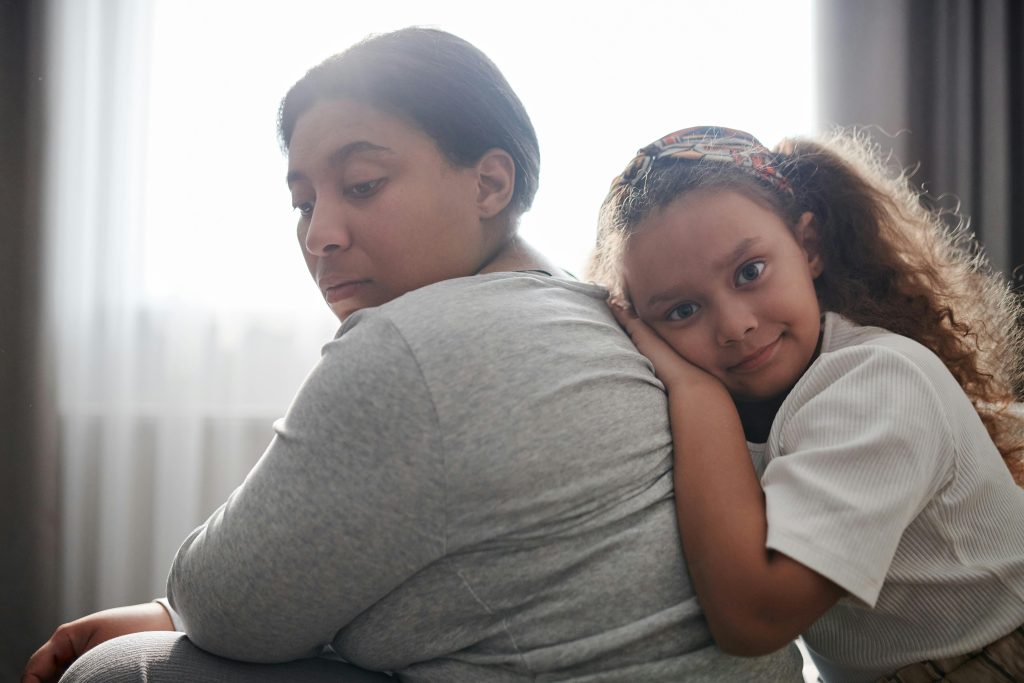
What nobody really talks about is how directly a parent’s internal state affects a child’s regulation and behaviour. A sensitive child who is normally fairly balanced can absorb the chaos of a parent’s mood, anxiety, or unresolved stress and amplify it back in ways that look a lot like defiance. So before we go anywhere near trying to diagnose your child’s behaviour, it’s worth asking yourself the question honestly.
Because if this behaviour is out of character, it isn’t necessarily because something is wrong with your child. It might be because something externally is throwing them off balance, and young children don’t have the words to tell you that. A four-year-old is never going to sit down and say, “Hey Mum, I can sense you’re really stressed about your new boss at work, and you’re pissed off with my Dad because he doesn’t communicate the way you need him to, so I’m absorbing all of that and using my behaviour to process and let go of it.” They just act it out in random ways. And we call it defiance.
So, where do you actually start?
The first place to look is always the home environment. What’s changed? Is there tension between the adults? Other siblings or family members? Has something shifted in the child’s routine or friendships? If nothing obvious has changed and this behaviour is genuinely out of character, something could be going on at kindy or school that they simply can’t articulate yet.
We know that children who hold it together in a school or kindy environment can fall apart the moment they walk through the front door, and are often doing exactly that, holding it together. They’ve spent the entire day pushing against an environment that doesn’t quite fit how they naturally operate, and by the time they get home, there’s nothing left. What looks like a child being defiant at home is often pent-up emotions, mental exhaustion, or a dysregulated nervous system with nowhere else to go.
If your child frequently complains about not liking school or kindy and those complaints are consistent, take that seriously. It doesn’t mean something is catastrophically wrong. It means they don’t feel entirely safe there, and something in the environment, a dynamic with a teacher, their peers, a friendship that’s shifted, a classroom that moves faster than they can comfortably process, is sitting unresolved.
Before you call the pediatrician
When a child’s behaviour is confusing and the usual approaches aren’t working, most parents end up in the diagnostic loop. Google searches lead to ODD, ADHD, sensory processing disorders, and a long list of labels that might explain what’s happening. Sometimes those labels are accurate, useful, and necessary. But sometimes the child isn’t disordered at all. They’re just differently wired, and nobody has given you a map for that yet.
That’s where Human Design comes in. I’ve been working with this system for years and have written about it for Natural Parent Magazine, and the reason I keep coming back to it as a parenting tool is simple: it works. Not because it’s complicated or mystical, but because it gives you a plain language map of how your specific child is actually built in their essence, how they generate and use their energy, how they process the world around them, how they make decisions that feel correct for them, and what throws them out of balance. Human Design is not a personality test and it’s not a diagnosis. It’s a framework that makes the behaviour and character traits you’ve been struggling to understand suddenly make complete sense.
Understanding your child’s Human Design energy type
Human Design identifies five energy types: Manifestor, Generator, Manifesting Generator, Projector, and Reflector. Each type has its own unique way of operating, its own energy rhythm, and its own set of needs that, when consistently unmet, can look from the outside like a child who is defiant, sensitive, or difficult.
Understanding even just your child’s Human Design energy type gives you an enormous amount of information to work with. When children are given the opportunity and age-appropriate space to stay connected to how they’re actually designed, they grow into emotionally mature young adults with a strong sense of who they are, confident in making decisions and resilient because they understand that their choices have consequences.
What this looks like in real life
Let’s take the Projector child, for example. A Projector child at kindy or pre-school three days a week needs more than most people realise. Their energy system works differently from other children, they’re not designed to be in constant output mode. Projector children thrive when they feel genuinely seen, invited into things, asked their opinion, and included. In a room of twenty children, a Projector child who feels overlooked starts to feel invisible, and for a young child, invisible feels a lot like unsafe.
They can’t tell the teacher that. The teacher sees a sensitive child, possibly overtired, possibly attention-seeking, or a child trying to take over, then crying because she doesn’t get her own way. What’s actually happening is that this child is running on empty because the environment hasn’t provided them with what they need, emotionally and energetically. At home, Projector children know exactly how to get their parents’ attention. At kindy or school, they feel different, and that gap comes out as upset, clinginess, or what looks like difficult behaviour.
Then there’s the Manifesting Generator child, who is a completely different experience. This child is a whirlwind, and they don’t like the words “stop” or “no, you can’t do that.” They want to get involved in everything they are curious about, they start things without finishing them, they have an idea, and they need to act on it right now, and they do not appreciate being interrupted mid-flow, they get frustrated and angry. In a strictly structured classroom setting, if it’s a creative project that isn’t finished, or someone tries to make them pack away the Lego when they’ve already mentally moved on to the next thing, the pushback can be dramatic and the tantrums and meltdowns will come. But this isn’t defiance. It’s a child whose energy system runs on a completely different circuit from the structure in the environment set up for them.
Manifesting Generator children have enormous amounts of energy when they are lit up doing something they love. Being pulled away from this is going to look like a defiant, misbehaved child who just won’t listen. But this child does not have the vocabulary to say to their educators or parents, “Hey, you know, I was deep in my imagination and was building something I wanted to experiment with to see if it would work because I saw it in a book and I’ve been thinking about it all morning, and now you’ve pulled me away because it’s story time and I don’t want a stupid story and sit with the other kids. I want to continue in my creative flow and be left alone.”
The better approach with a Manifesting Generator child isn’t firmer boundaries or trying to get them to comply. It’s better questions and cues. “How are you going with this? Do you need more time?” “We are having some quiet time soon. Maybe you can draw the rest of the project you’re building while we have a story.” Give them an option, give them a timeline, let them feel like they have some agency in the process. The behaviour shifts almost immediately when you understand what’s actually driving it, because they feel seen and understood in that moment and they trust that you will honour their process.
What happens when parents find out their child’s Human Design
Almost every single parent I’ve worked with says the same thing when they read their child’s Human Design for the first time. “I had no idea. This makes complete sense. I’ve been doing this wrong all these years.”
The guilt comes fast and hard. I know because I felt it myself when I discovered my daughter’s design. She’s a Projector. She was five when I found out, she’s eleven now, and I still think back to the moments I misread her clinginess as neediness, her exhaustion and refusal to do things as laziness, or her sensitivity as drama, because I didn’t have the map yet.
The guilt is normal. And it isn’t the point.
We don’t realise how much we project our day-to-day stressful, high-pressure, structured lives onto our children, how unconsciously we expect them to see the world through our eyes, to operate on our timeline because we are so busy surviving the rat race, to regulate in ways we were never even taught ourselves. Most of us grew up stuffing things down. Getting on with it. Not making a fuss, and without meaning to, we bring that into our homes, our parenting, and classrooms to create outcomes and tickboxes for regulating bodies.
Almost every parent secretly thinks to themselves about their children, “You have everything you need, so why are you being difficult? Why won’t you listen? Why won’t you just comply and do what you are asked?” But this is all to make our lives easier and less stressful. It’s just not how children think.
Then we reach our limit, lose our shit, and vomit it all out at once, and then we feel guilty about that too.
The micro moments matter more than you think
Here’s what I observe a lot with parents, and I say this without judgment because I’ve done it myself. A child misbehaves, the mum doesn’t want to come down too hard, or she’s distracted with something else, so she lets it go. Then it happens again. And again. Until she hits her limit and she snaps, and that response, the one born out of exhaustion and pure frustration, is far harsher than a calm, clear correction in the moment would ever have been. The very thing she was trying to avoid, harshness, she’s created by waiting too long.
We also forget that children are natural born gamblers. They will take their chances every time. If the line moved a little yesterday, they’ll keep pushing to find out where it actually is today. That’s not defiance. That’s a child trying to make sense of an unpredictable world, and it isn’t fair to them. If the behaviour is not okay, they deserve to know where the line is consistently.
A child who knows what to expect from you is a child who feels safe, even when the answer is no. A calm, clear, immediate response to unwanted behaviour isn’t harshness. It’s the kindest thing you can do, for them and for yourself. It keeps the situation small, it keeps your tongue steady, and it gives your child the gift of a parent they can count on to guide them. When you understand how your child is naturally wired through their Human Design, you can’t help but get curious about their behaviour and give them an opportunity to communicate what’s going on for them. It helps them feel like you understand, even if you don’t agree. Most of the time, children just want to fit in, they feel so misunderstood in the outside world it’s hard for them to be comfortable in their own skin, even if you have an amazing family set up at home.
As they grow, that message and the structure and boundary you have consistently provided eventually gets stronger and drops into their awareness, and instead of acting out or misbehaving, they can come to the table honestly and tell you what’s actually going on in their world.
That’s what understanding your child’s design makes possible. It gives you a full picture of how sensitive they are to pressure, to other people’s emotions, to the fear of not belonging. It shows you where they’re likely to push against their own nature to fit in, and where they need you to advocate for them rather than manage or feel the need to correct them.
You’re a great parent
The fact that you’re still reading this says everything. You’re willing to look at other perspectives, to ask different questions, to consider that the story of the difficult child might not be the whole story.
You don’t know what you don’t know. If you’d never heard of Human Design before this post, that’s not a failure, it’s just information you didn’t have yet. And now you do.
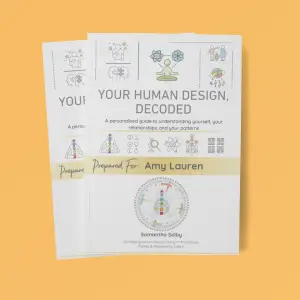
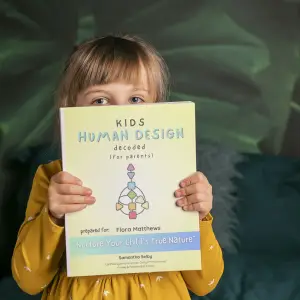
If any of this is making sense to you, I’d encourage you to take a look at your child’s personalised Human Design book. It’s written in plain English, created specifically for your child based on their unique birth data, and once you start reading it you’ll see your child and yourself through a completely different lens.
Your child will thank you for it.
If you’re not sure where to start, you can generate your child’s free Human Design chart here. All you need is their date, time, and place of birth.